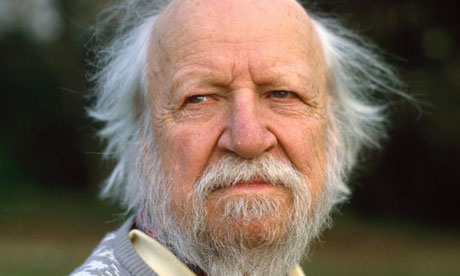

William Golding, Nobel Prize-winning author of Lord of the Flies
photo credit: guardian.co.uk
William Golding, Nobel Prize-winning author of Lord of the Flies
photo credit: guardian.co.uk
FALL
SEMESTER--English 101: Composition 1
SPRING SEMESTER--English 210: Introduction to Literature
Matt Christensen
scholarlynx.blogspot.com
scholarlynx.wikispaces.com
August | September | October | November | December | January | February | March | April | May |
|
|
|
 |
 210
210 |
|
What we do in class |
Due Today | |
| Monday 8/13 | Football begins: GO LYNX! | |
| Tuesday 8/14 | ||
| Wednesday 8/15 | ||
| Thursday 8/16 | ||
| Friday 8/17 | ||
|
What we do in class |
Due Today | |
| Monday 8/20 | trade (wo)Manhood essays; syllabus & college class registration | (Wo)Manhood Essay |
| Tuesday 8/21 | syllabus as informational text; Term Tuesday--euphemism; first essay directions | |
| Wednesday 8/22 | Sentences: Grammatical classification; Functional classification; & Rhetorical classification | 3 critiques per page |
| Thursday 8/23 | Sentences: building first essay with handbook; Art of Styling Sentences=Final Exam preparation | |
| Friday 8/24 | Sentences: building first essay with
handbook PREZI for polishing |
|
|
What we do in class |
Due Today | |
| Monday 8/27 | LAB MLA setup and essay building PREZI; email & blog work | 3 critiques per page |
| Tuesday 8/28 | Sentences: syntax quiz; Term Tuesday--syntax | |
| Wednesday 8/29 | Sentences: essay development workshop | |
| Thursday 8/30 | Sentences: outlining & polishing | Reflection blog task |
| Friday 8/31 | Sentences: small-group workshop PREZI | old & polished (Wo)Manhood essays |
|
What we do in class |
Due Today | |
| Monday 9/3 | No classes | |
| Tuesday 9/4 | LAB Term Tuesday--altruism (CHALLENGE DAY) | |
| Wednesday 9/5 | syntax quiz; workshop with title emphasis | |
| Thursday 9/6 | LAB to type essays | |
| Friday 9/7 | symposiums & handbook exercises | rough draft of Classification essay due |
|
What we do in class |
Due Today | |
| Monday 9/10 | LAB--master those ten tasks that must be included | |
| Tuesday 9/11 | Symposiums after handbook chapter 42; Term Tuesday--juxtaposition | |
| Wednesday 9/12 | Symposiums after handbook chapter 43; vocabulary quiz | Dress up as a protagonist or antagonist--or as an author--to earn literary bonus points. |
| Thursday 9/13 | handbook chapter 44 to bolster sentences | Essay 1: Classification (p. 119); Reflection blog task |
| Friday 9/14 | Homecoming! | |
|
What we do in class |
Due Today | |
| Monday 9/17 | LAB to embark on Comparison & Contrast | |
| Tuesday 9/18 | Mrs. Stemwedel | |
| Wednesday 9/19 | syntax quiz & symposiums | |
| Thursday 9/20 | handbook exercises--45, 29, & 30 | |
| Friday 9/21 | LAB musical chairs in lab to improve peers' essays | rough draft of Comparison & Contrast due |
|
What we do in class |
Due Today |
|
| Monday 9/24 | LAB to refine in structured silence | |
| Tuesday 9/25 | 11-20 inquiries, then symposium; Term Tuesday--MLA | |
| Wednesday 9/26 | handbook exercises to raise essay grades with enhanced sentence variety; vocabulary quiz 1 | |
| Thursday 9/27 | symposiums | Blog task |
| Friday 9/28 | pass & polish; begin essay 3 | Essay 2: Comparison & Contrast (p. 120) |
|
What we do in class |
Due Today | |
| Monday
10/1 early dismissal |
LAB to list reasons a phenomenon exists | |
| Tuesday 10/2 early dismissal |
Speculation practice (group symposiums too). WHY is Saturday School full? WHY is pizza so amazingly popular? Term Tuesday-- | |
| Wednesday 10/3 | Chapters 15-18--MLA; vocabulary quiz 2 | |
| Thursday 10/4 | LAB to develop content | |
| Friday 10/5 | No classes | |
|
What we do in class |
Due Today | |
| Monday 10/8 | No classes | |
| Tuesday 10/9 | LAB for musical chairs or research; Term Tuesday--citation | |
| Wednesday 10/10 | in-text citations, paraphrasing; vocabulary quiz 3 | |
| Thursday 10/11 | syntax quiz and chapters 15-18 clarifications | Reflection blog task |
| Friday 10/12 | swap and refine | Causal rough draft due |
|
What we do in class |
Due Today | |
| Monday 10/15 | LAB for musical chairs | |
| Tuesday 10/16 | juxtapose previous essays; Term Tuesday-- | |
| Wednesday 10/17 | vocabulary quiz 1-3 | |
| Thursday 10/18 | LAB to polish | |
| Friday 10/19 | begin narrative essay | Essay 3: Causal (p.121) |
|
What we do in class |
Due Today | |
| Monday 10/22 | writing exercises to bolster narrative abilities: suspense, non sequitur, dramatic effects, profound prose--terrific sample storytelling in Wall-E | |
| Tuesday 10/23 | pods to gauge audience; Term Tuesday--pique | |
| Wednesday 10/24 | six-word stories like Ernest Hemingway; vocabulary quiz 4 | |
| Thursday 10/25 | sculpture poetry to practice figurative language and literary devices NORTH GYM | |
| Friday 10/26 | sculpture poetry to practice figurative language and literary devices NORTH GYM | |
| ACT Saturday | ||
|
What we do in class |
Due Today | |
| Monday 10/29 | LAB to generate narratives | |
| Tuesday 10/30 | LAB ; Term Tuesday--segue | |
| Wednesday 10/31 | vocabulary quiz 5 & George Orwell's "Shooting an Elephant" | |
| Thursday 11/1 | literary devices practice; final exam fulfillment | |
| Friday 11/2 | swap to refine and polish | Narrative rough draft due |
|
What we do in class |
Due Today | |
| Monday 11/5 | LAB to generate narratives | |
| Tuesday 11/6 | audience practice in groups--reading aloud (sound test); Term Tuesday-- | |
| Wednesday 11/7 | vocabulary quiz 6 & final exam fulfillment | |
| Thursday 11/8 | syntax practice to include variety in essays | blog task |
| Friday 11/9 | read part or all to enjoy--aloud (theatrically) for bonus | Essay 4: Narrative (p. 116) |
|
What we do in class |
Due Today | |
| Monday 11/12 | No classes | |
| Tuesday 11/13 | Term Tuesday--Logos, Ethos, Pathos & C.H.E.S.S. rhetoric strategies | |
| Wednesday 11/14 | My $2000 letter to Wellmark Blue Cross-Blue Shield; vocabulary quiz 4-6 | |
| Thursday 11/15 | LAB | |
| Friday 11/16 | LAB | |
|
What we do in class |
Due Today | |
| Monday 11/19 | LAB | |
| Tuesday 11/20 | The $1500 bat removal; swap to refine & polish; Term Tuesday--rhetoric | Argumentation rough draft |
| Wednesday 11/21 early dismissal |
vocabulary quiz 1-6 | |
| Thursday 11/22 | No classes | |
| Friday 11/23 | No classes | |
|
What we do in class |
Due Today | |
| Monday 11/26 | LAB | |
| Tuesday 11/27 | LAB | |
| Wednesday 11/28 | vocabulary quiz 7 | |
| Thursday 11/29 | 41-50 final exam mandates? All C.H.E.S.S. strategies? Each of Aristotle's "three Musketeers" (logos, ethos, pathos)? | |
| Friday 11/30 | debates! | |
|
What we do in class |
Due Today | |
| Monday 12/3 | debates! | |
| Tuesday 12/4 | My letter as Lily to the Chicago Bears--using Logos, Ethos, Pathos to get what you need/want/expect; Term Tuesday--ambience | Essay 5: Argumentation |
| Wednesday 12/5 | vocabulary quiz 8; semester test preparation | |
| Thursday 12/6 | semester test preparation | blog task |
| Friday 12/7 | LAB to type letters | |
|
What we do in class |
Due Today | |
| Monday 12/10 | LAB to finish & print letters | |
| Tuesday 12/11 | semester test preparation; Term Tuesday--"examination" | |
| Wednesday 12/12 | vocabulary quiz 9 & semester test preparation | |
| Thursday 12/13 | semester test review | |
| Friday 12/14 | semester test review | |
|
What we do in class |
Due Today | |
| Monday 12/17 | semester test review | |
| Tuesday 12/18 | study & review | |
| Wednesday 12/19 | semester test 8:00 a.m. | |
| Thursday 12/20 | ||
| Friday 12/21 | ||
|
What we do in class |
Due Today | |
| Monday 12/24 | No classes | |
| Tuesday 12/25 | No classes | |
| Wednesday 12/26 | No classes | |
| Thursday 12/27 | No classes | |
| Friday 12/28 | No classes | |
|
What we do in class |
Due Today | |
| Monday 12/31 | No classes | |
| Tuesday 1/1 | No classes | |
| Wednesday 1/2 | No classes | |
| Thursday 1/3 | No classes | |
| Friday 1/4 | No classes | |
|
What we do in class |
Due Today | |
| Monday 1/7 | English 210: Introduction to
Literature-- MONSTROSITY WITHIN Lord of the Flies by William Golding with literary criticism & theory PREZI On paper to be handed in: in as few sentences as possible, summarize the novel, being certain to include all salient sections. Your reading work shall be rewarded. |
1. Lord of the Flies read, studied, &
annotated 2. The Lion King film viewed carefully & and the prezi studied thoroughly |
| Tuesday 1/8 | Lord of the Flies: literary criticism and theory LENSES; Term Tuesday--allegory | |
| Wednesday 1/9 | Lord of the Flies: literary criticism and theory LENSES | |
| Thursday 1/10 | Lord of the Flies: forum quiz | blog task |
| Friday 1/11 | Lord of the Flies: write to respond to my essay | |
|
What we do in class |
Due Today | |
| Monday 1/14 | MONSTERS OF THE MIND One Flew Over the Cuckoo's Nest by Ken Kesey: experimental fiction techniques |
|
| Tuesday 1/15 | One Flew Over the Cuckoo's Nest: Term Tuesday--functions of the novelist | |
| Wednesday 1/16 | One Flew Over the Cuckoo's Nest: ; vocabulary quiz 7-9 | |
| Thursday 1/17 | One Flew Over the Cuckoo's Nest: | blog task |
| Friday 1/18 | One Flew Over the Cuckoo's Nest: forum quiz | |
|
What we do in class |
Due Today | |
| Monday 1/21 | No classes | |
| Tuesday 1/22 | One Flew Over the Cuckoo's Nest: anticipation guide, literary criticism flexbook, clarifications, and reading time; Term Tuesday--schizophrenia | |
| Wednesday 1/23 | One Flew Over the Cuckoo's Nest: read and annotate after vocabulary quiz 1-9 | |
| Thursday 1/24 | One Flew Over the Cuckoo's Nest: forum quiz | blog task; |
| Friday 1/25 | One Flew Over the Cuckoo's Nest: literary criticism reinforcement | |
|
What we do in class |
Due Today | |
| Monday 1/28 | One Flew Over the Cuckoo's Nest: literary criticism reinforcement | |
| Tuesday 1/29 | One Flew Over the Cuckoo's Nest: READ in class; Term Tuesday--extrapolate | |
| Wednesday 1/30 | One Flew Over the Cuckoo's Nest: ; vocabulary quiz 10 | |
| Thursday 1/31 | One Flew Over the Cuckoo's Nest: forum quiz | blog task; |
| Friday 2/1 | One Flew Over the Cuckoo's Nest: extend forum particularly to include research from critics and scholars | |
|
What we do in class |
Due Today | |
| Monday 2/4 | One Flew Over the Cuckoo's Nest: extend forum particularly to include research from critics and scholars | |
| Tuesday 2/5 | Cuckoo's Nest clip then Life of Pi: Term Tuesday--meta-fiction & "Author's Note" | |
| Wednesday 2/6 | Life of Pi: vocabulary quiz 11, then read to produce opinions | |
| Thursday 2/7 | Life of Pi: read and annotate | |
| Friday 2/8 | Life of Pi: forum quiz | page 93 |
|
What we do in class |
Due Today | |
| Monday 2/11 early dismissal |
Life of Pi: read & annotate with archetypal criticism in mind | |
| Tuesday 2/12 early dismissal |
Life of Pi: Term Tuesday--archetype | blog task |
| Wednesday 2/13 | Life of Pi: ; vocabulary quiz 12 | |
| Thursday 2/14 | Life of Pi: forum quiz | page 169; |
| Friday 2/15 | No classes | |
|
What we do in class |
Due Today | |
| Monday 2/18 | No classes | |
| Tuesday 2/19 | Life of Pi: feat work; Term Tuesday--asymptote | Cuckoo's Nest FILM TONIGHT 7:30 |
| Wednesday 2/20 | Life of Pi: vocabulary quiz 10-12 | |
| Thursday 2/21 | Life of Pi: forum quiz | page 214; blog task |
| Friday 2/22 | Life of Pi: read & annotate | |
|
What we do in class |
Due Today | |
| Monday 2/25 | Life of Pi: "What is my cousin reading?" Project | page 286 |
| Tuesday 2/26 | Life of Pi: lab to craft letters | |
| Wednesday 2/27 | Life of Pi: read | |
| Thursday 2/28 | Life of Pi: forum quiz | page 319; blog task |
| Friday 3/1 | Life of Pi: Feat work & obtain novel | |
|
What we do in class |
Due Today | |
| Monday 3/4 | MONSTROUS "HOMES" archetypes & experimental fiction: teach each other |
|
| Tuesday 3/5 | The Bluest Eye: lab for Morrison research | |
| Wednesday 3/6 | The Bluest Eye: Life of Pi exam--find on class wikispace (exam may be postponed, based on Martel's reply speed) | |
| Thursday 3/7 | The Bluest Eye: forum quiz | |
| Friday 3/8 | The Bluest Eye: acknowledge Morrison's mastery | |
|
What we do in class |
Due Today | |
| Monday 3/11 | The Bluest Eye: feat work & Morrison interviews | |
| Tuesday 3/12 | The Bluest Eye: feat work & Morrison archetypes; Term Tuesday--abject | |
| Wednesday 3/13 | The Bluest Eye: feat work & Morrison devices | |
| Thursday 3/14 | The Bluest Eye: forum quiz in three thirds | blog task; |
| Friday 3/15 | Show Feats | Feat due |
|
What we do in class |
Due Today | |
| Monday 3/18 | Show Feats | |
| Tuesday 3/19 | Show Feats / study Faulkner | |
| Wednesday 3/20 | The Bluest Eye: read Hemingway | |
| Thursday 3/21 | The Bluest Eye: forum with "Pantaloon in Black" | finish The Bluest Eye & "Pantaloon in Black" |
| Friday 3/22 | The Bluest Eye: read Chopin | finish Bierce |
|
| ||
|
What we do in class |
Due Today | |
| Monday 3/25 |
MONSTRUM, MONEO, AND MANIFESTO Selected poetry: Hicks |
|
| Tuesday 3/26 | Selected poetry: Hicks; Term Tuesday--scansion | |
| Wednesday 3/27 | Selected poetry: Shakespeare | |
| Thursday 3/28 early dismissal |
Selected poetry: Yeats & Thomas | blog task |
| Friday 3/29 | No classes | |
|
What we do in class |
Due Today | |
| Monday 4/1 | No classes | |
| Tuesday 4/2 | Selected poetry: Eliot; Term Tuesday--explication | |
| Wednesday 4/3 | no classes--Be The Change | |
| Thursday 4/4 | Selected poetry: Lowell & Brooks | |
| Friday 4/5 | Bishop | |
|
What we do in class |
Due Today | |
| Monday 4/8 | lab | |
| Tuesday 4/9 | lab | |
| Wednesday 4/10 | Selected poetry: Lee | |
| Thursday 4/11 | north gym for sculpture | |
| Friday 4/12 | essay work: write without me | |
|
What we do in class |
Due Today | |
| Monday 4/15 |
THE GREEN-EYED MONSTER The Tragedy of Othello, The Moor of Venice by William Shakespeare: context & test introduction |
|
| Tuesday 4/16 | The Tragedy of Othello, The Moor of
Venice: ; Term Tuesday-- PAC to view the splendor of Shakespeare |
blog task |
| Wednesday 4/17 | The Tragedy of Othello, The Moor of Venice: PAC to view the splendor of Shakespeare | |
| Thursday 4/18 | SENIOR RETREAT | |
| Friday 4/19 | The Tragedy of Othello, The Moor of
Venice: PAC to view the splendor of Shakespeare |
15 insightful questions & comments |
|
What we do in class |
Due Today | |
| Monday 4/22 | presentation group work & Othello discussion | |
| Tuesday 4/23 | presentation group work & Patrick Hicks introduction | |
| Wednesday 4/24 | Poet & Professor Patrick Hicks of Augustana College | |
| Thursday 4/25 | lab | |
| Friday 4/26 | lab "musical chairs" | ROUGH DRAFT DUE |
|
What we do in class |
Due Today | |
| Monday 4/29 | The Tragedy of Othello, The Moor of Venice: ACT I experience | |
| Tuesday 4/30 | The Tragedy of Othello, The Moor of Venice: ACT II experience; Term Tuesday-- | blog tasks |
| Wednesday 5/1 | The Tragedy of Othello, The Moor of Venice: ACT III experience | |
| Thursday 5/2 | The Tragedy of Othello, The Moor of Venice: ACT IV experience | |
| Friday 5/3 | lab for essay work | |
|
What we do in class |
Due Today | |
| Monday 5/6 | lab for essay work | |
| Tuesday 5/7 | The Tragedy of Othello, The Moor of Venice: ACT V experience; Term Tuesday-- | |
| Wednesday 5/8 | lab for essay work | |
| Thursday 5/9 | essay work--print for peer edit | Do the ode blog task (due May 15) instead of the Othello blog task, originally scheduled to be due today. |
| Friday 5/10 | BOOK RETURN; read essays silently then loudly | COMMON THREAD ESSAY |
|
What we do in class |
Due Today | |
| Monday 5/13 | review, culminate: write questions for test-taking teammates, then answer questions in team, then quiz each other on quotes | |
| Tuesday 5/14 | Othello test | |
| Wednesday 5/15 | assembly then exam preparation | ode blog task |
| Thursday 5/16 | review, culminate | |
| Friday 5/17 | FINAL EXAM 9:00 a.m. | |
|
What we do in class |
Due Today | |
| Monday 5/20 | ||
| Tuesday 5/21 | ||
| Wednesday 5/22 | ||
| Thursday 5/23 | ||
| Friday 5/24 | ||
|
What we do in class |
Due Today | |
| Monday 5/27 | ||
| Tuesday 5/28 | ||
| Wednesday 5/29 | ||
| Thursday 5/30 | ||
| Friday 5/31 |
| Other Information and Extra Credit |
LANGUAGE (GRADES 11-12)Conventions of Standard EnglishL.11-12.1 Demonstrate command of the conventions of standard English grammar and usage when writing or speaking.
L.11-12.2 Demonstrate command of the conventions of standard English capitalization, punctuation, and spelling when writing.
Knowledge of LanguageL.11-12.3 Apply knowledge of language to understand how language functions in different contexts, to make effective choices for meaning or style, and to comprehend more fully when reading or listening.
Vocabulary Acquisition and UseL.11-12.4 Determine or clarify the meaning of unknown and multiple-meaning words and phrases based on grades 11–12 reading and content, choosing flexibly from a range of strategies.
L.11-12.5 Demonstrate understanding of figurative language, word relationships, and nuances in word meanings.
L.11-12.6 Acquire and use accurately general academic and domain-specific words and phrases, sufficient for reading, writing, speaking, and listening at the college and career readiness level; demonstrate independence in gathering vocabulary knowledge when considering a word or phrase important to comprehension or expression. READING: INFORMATIONAL TEXTS (GRADES 11-12)Key Ideas and DetailsRI.11-12.1 Cite strong and thorough textual evidence to support analysis of what the text says explicitly as well as inferences drawn from the text, including determining where the text leaves matters uncertain. RI.11-12.2 Determine two or more central ideas of a text and analyze their development over the course of the text, including how they interact and build on one another to provide a complex analysis; provide an objective summary of the text. RI.11-12.3 Analyze a complex set of ideas or sequence of events and explain how specific individuals, ideas, or events interact and develop over the course of the text. Craft and StructureRI.11-12.4 Determine the meaning of words and phrases as they are used in a text, including figurative, connotative, and technical meanings; analyze how an author uses and refines the meaning of a key term or terms over the course of a text (e.g., how Madison defines faction in Federalist No. 10). RI.11-12.5 Analyze and evaluate the effectiveness of the structure an author uses in his or her exposition or argument, including whether the structure makes points clear, convincing, and engaging. RI.11-12.6 Determine an author’s point of view or purpose in a text in which the rhetoric is particularly effective, analyzing how style and content contribute to the power, persuasiveness or beauty of the text. Integration of Knowledge and IdeasRI.11-12.7 Integrate and evaluate multiple sources of information presented in different media or formats (e.g., visually, quantitatively) as well as in words in order to address a question or solve a problem. RI.11-12.8 Delineate and evaluate the reasoning in seminal U.S. texts, including the application of constitutional principles and use of legal reasoning (e.g., in U.S. Supreme Court majority opinions and dissents) and the premises, purposes, and arguments in works of public advocacy (e.g., The Federalist, presidential addresses). RI.11-12.9 Analyze seventeenth-, eighteenth-, and nineteenth-century foundational U.S. documents of historical and literary significance (including The Declaration of Independence, the Preamble to the Constitution, the Bill of Rights, and Lincoln’s Second Inaugural Address) for their themes, purposes, and rhetorical features. Range of Reading and Level of Text ComplexityRI.11-12.10 By the end of grade 11, read and comprehend literary nonfiction in the grades 11–CCR text complexity band proficiently, with scaffolding as needed at the high end of the range. By the end of grade 12, read and comprehend literary nonfiction at the high end of the grades 11–CCR text complexity band independently and proficiently.
READING: LITERATURE (GRADES 11-12)Key Ideas and DetailsRL.11-12.1 Cite strong and thorough textual evidence to support analysis of what the text says explicitly as well as inferences drawn from the text, including determining where the text leaves matters uncertain. RL.11-12.2 Determine two or more themes or central ideas of a text and analyze their development over the course of the text, including how they interact and build on one another to produce a complex account; provide an objective summary of the text. RL.11-12.3 Analyze the impact of the author’s choices regarding how to develop and relate elements of a story or drama (e.g., where a story is set, how the action is ordered, how the characters are introduced and developed). Craft and StructureRL.11-12.4 Determine the meaning of words and phrases as they are used in the text, including figurative and connotative meanings; analyze the impact of specific word choices on meaning and tone, including words with multiple meanings or language that is particularly fresh, engaging, or beautiful. (Include Shakespeare as well as other authors.) RL.11-12.5 Analyze how an author’s choices concerning how to structure specific parts of a text (e.g., the choice of where to begin or end a story, the choice to provide a comedic or tragic resolution) contribute to its overall structure and meaning as well as its aesthetic impact. RL.11-12.6 Analyze a case in which grasping a point of view requires distinguishing what is directly stated in a text from what is really meant (e.g., satire, sarcasm, irony, or understatement). Integration of Knowledge and IdeasRL.11-12.7 Analyze multiple interpretations of a story, drama, or poem (e.g., recorded or live production of a play or recorded novel or poetry), evaluating how each version interprets the source text. (Include at least one play by Shakespeare and one play by an American dramatist.) (RL.11-12.8 not applicable to literature) RL.11-12.9 Demonstrate knowledge of eighteenth-, nineteenth- and early-twentieth-century foundational works of American literature, including how two or more texts from the same period treat similar themes or topics. Range of Reading and Level of Text Complexity
RL.11-12.10 By the end of grade 11, read and comprehend
literature, including stories, dramas, and poems, in the grades 11–CCR
text complexity band proficiently, with scaffolding as needed at the
high end of the range. By the end of grade 12, read and comprehend
literature, including stories, dramas, and poems, at the high end of the
grades 11–CCR text complexity band independently and proficiently. SPEAKING & LISTENING (GRADES 11-12)Comprehension and CollaborationSL.11-12.1 Initiate and participate effectively in a range of collaborative discussions (one-on-one, in groups, and teacher-led) with diverse partners on grades 11–12 topics, texts, and issues, building on others’ ideas and expressing their own clearly and persuasively.
SL.11-12.2 Integrate multiple sources of information presented in diverse formats and media (e.g., visually, quantitatively, orally) in order to make informed decisions and solve problems, evaluating the credibility and accuracy of each source and noting any discrepancies among the data. SL.11-12.3 Evaluate a speaker’s point of view, reasoning, and use of evidence and rhetoric, assessing the stance, premises, links among ideas, word choice, points of emphasis, and tone used. Presentation of Knowledge and IdeasSL.11-12.4 Present information, findings, and supporting evidence, conveying a clear and distinct perspective, such that listeners can follow the line of reasoning, alternative or opposing perspectives are addressed, and the organization, development, substance, and style are appropriate to purpose, audience, and a range of formal and informal tasks. SL.11-12.5 Make strategic use of digital media (e.g., textual, graphical, audio, visual, and interactive elements) in presentations to enhance understanding of findings, reasoning, and evidence and to add interest. SL.11-12.6 Adapt speech to a variety of contexts and tasks, demonstrating a command of formal English when indicated or appropriate. The CCR anchor standards and high school grade-specific standards work in tandem to define college and career readiness expectations—the former providing broad standards, the latter providing additional specificity. WRITING (GRADES 11-12)Text Types and PurposesW.11-12.1 Write arguments to support claims in an analysis of substantive topics or texts, using valid reasoning and relevant and sufficient evidence.
W.11-12.2 Write informative/explanatory texts to examine and convey complex ideas, concepts, and information clearly and accurately through the effective selection, organization, and analysis of content.
W.11-12.3 Write narratives to develop real or imagined experiences or events using effective technique, well-chosen details, and well-structured event sequences.
Production and Distribution of WritingW.11-12.4 Produce clear and coherent writing in which the development, organization, and style are appropriate to task, purpose, and audience. (Grade-specific expectations for writing types are defined in standards 1–3 above.) W.11-12.5 Develop and strengthen writing as needed by planning, revising, editing, rewriting, or trying a new approach, focusing on addressing what is most significant for a specific purpose and audience. W.11-12.6 Use technology, including the Internet, to produce, publish, and update individual or shared writing products in response to ongoing feedback, including new arguments or information. Research to Build and Present KnowledgeW.11-12.7 Conduct short as well as more sustained research projects to answer a question (including a self-generated question) or solve a problem; narrow or broaden the inquiry when appropriate; synthesize multiple sources on the subject, demonstrating understanding of the subject under investigation. W.11-12.8 Gather relevant information from multiple authoritative print and digital sources, using advanced searches effectively; assess the strengths and limitations of each source in terms of the task, purpose, and audience; integrate information into the text selectively to maintain the flow of ideas, avoiding plagiarism and overreliance on any one source and following a standard format for citation. W.11-12.9 Draw evidence from literary or informational texts to support analysis, reflection, and research.
Range of WritingW.11-12.10 Write routinely over extended time frames (time for research, reflection, and revision) and shorter time frames (a single sitting or a day or two) for a range of tasks, purposes.
|


